
Rehearse oil and gas emergency response before it reaches the live plant
Sinewave Campus produced an emergency-response scenario with OPITO, inside a simulated hydrogen plant for its Global Conference 2025.
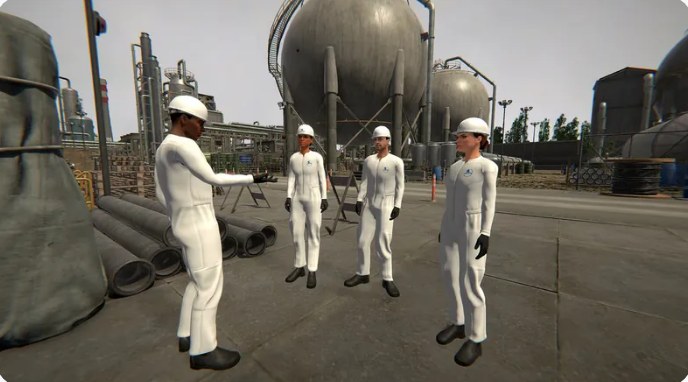
How the OPITO run unfolds
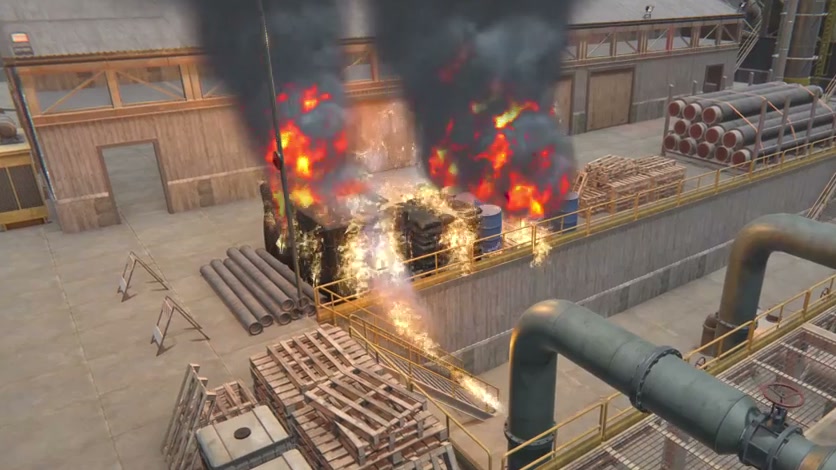
A gas escape ignites inside the simulated hydrogen plant.
Weather, fire, smoke, and alarms change during the run, and visibility drops with them. Emergency lighting and announcements follow.
How a scenario places hazards around a procedure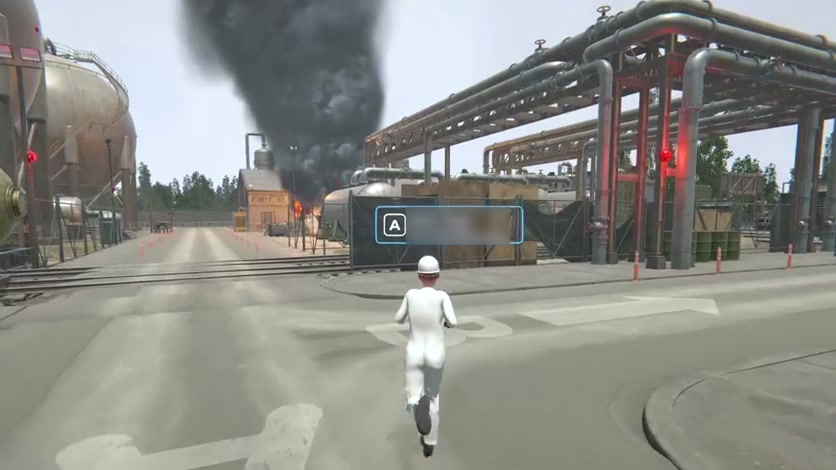
Participants acting as on-site workers respond, follow the safety procedure, and make their way to the muster point, each deciding for themselves.
How the OPITO run went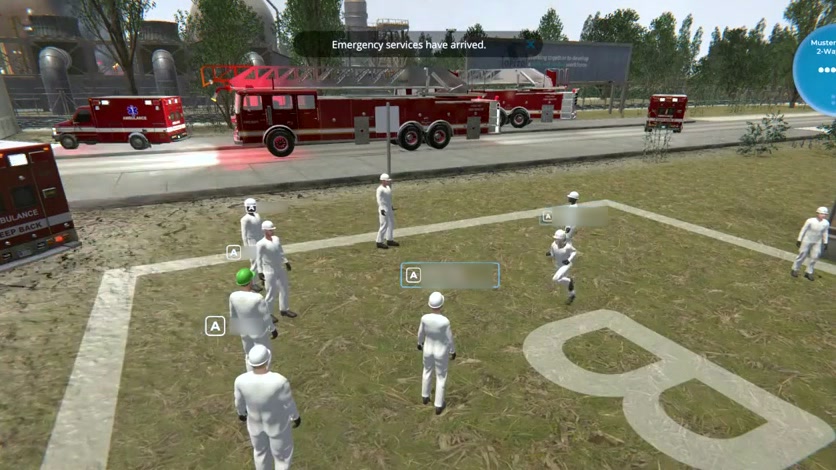
2 of the 5 roles carry the run.
The Muster Coordinator and the Muster Checker coordinate the site evacuation, communicate with the control room, and make judgment calls under pressure. The other 3 take part as evacuees.
Read the OPITO case study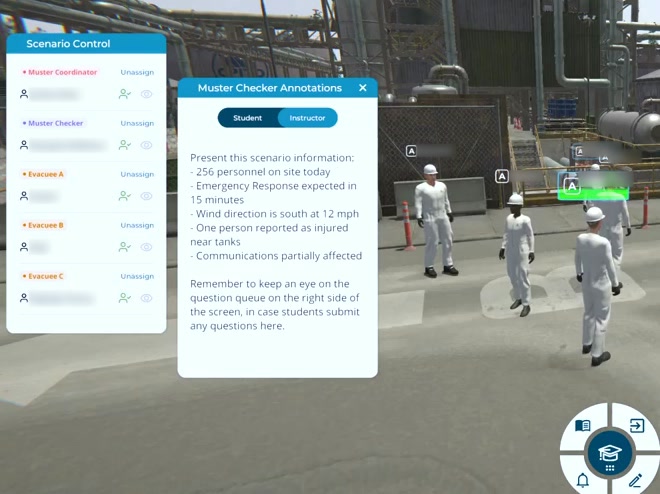
The instructor assigns the 5 roles in real time and can change them as the scenario develops, moves participants through a multi-step sequence, and closes the session with a quiz and a feedback step.
How roles work in the OPITO scenarioFire taking hold beside the pipework, mid-run.
Case study · OPITO
Trusted by the global standard in energy skills training
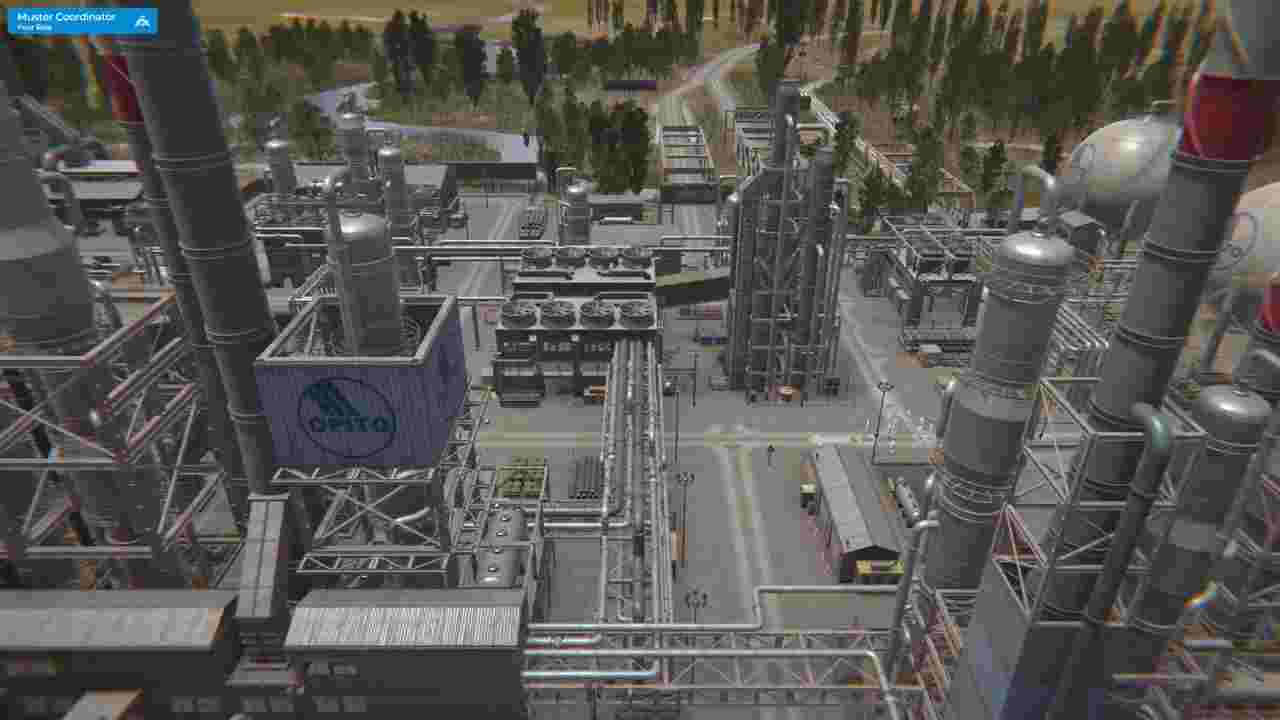
OPITO writes the training standards the global energy industry works to. For its Global Conference it wanted emergency response training demonstrated.
- Roles
- Muster Coordinator, Muster Checker, Evacuees A, B and C
- The event
- A lightning strike, a fire, alarms and an evacuation to the muster point
- Control
- Instructor-led throughout; the Muster Checker is scored
What the run showed
Several people, one procedure
5 live participants held assigned roles in the same scenario, at the same time.
A scored role, and every action recorded
The Muster Checker is scored, and the run records each participant’s actions, quiz and feedback.
The instructor stays in charge
Instructors set the scenario, move it through each step, review the run and decide what the score means.
Practise as often as needed
Most of these rules ask for adequate practice and leave how often to you.
The rules
UK offshore rules
Tested by practice as often as may be appropriate
EU Seveso III
Sets a maximum gap between tests
US process safety
Refresher training, drills left open
Mobile offshore drilling units
The only rule here that sets a number of drills
UK offshore rules ask for emergency arrangements to be tested by practice as often as is appropriate. The EU Seveso III directive sets a maximum gap between tests rather than a schedule, and US process-safety rules set refresher training on operating procedures but leave drills open. Only the US rule for mobile offshore drilling units sets a number of drills.
Meeting “as often as may be appropriate” is hard when every drill takes a plant or a crew offline. A scenario in Sinewave Campus runs again whenever you need it, with no shutdown, and every run is recorded.
After the Texas City refinery explosion, the US Chemical Safety Board recommended that the BP Texas City refinery improve its operator training, including training in recognising and handling abnormal situations using simulators or similar training tools.
What regulators and safety bodies sayBring your own procedure and site.
We’ll build a scenario around them.
What we’ll cover on a first call
One scenario is enough to start.
- The scenarioThe event your team most needs to rehearse, described in your own words
- The rolesWho is present when it happens, and what each of them is responsible for
- The peopleHow many need to rehearse it, and how often each of them does
- The constraintsSecurity, identity, deployment and integration requirements
- The measuresWhat you would measure, what it is measured against, and who reads it
Go deeper
Case study · OPITO
The OPITO scenario
What was built, how a run went, and what the session recorded.
Read the OPITO case study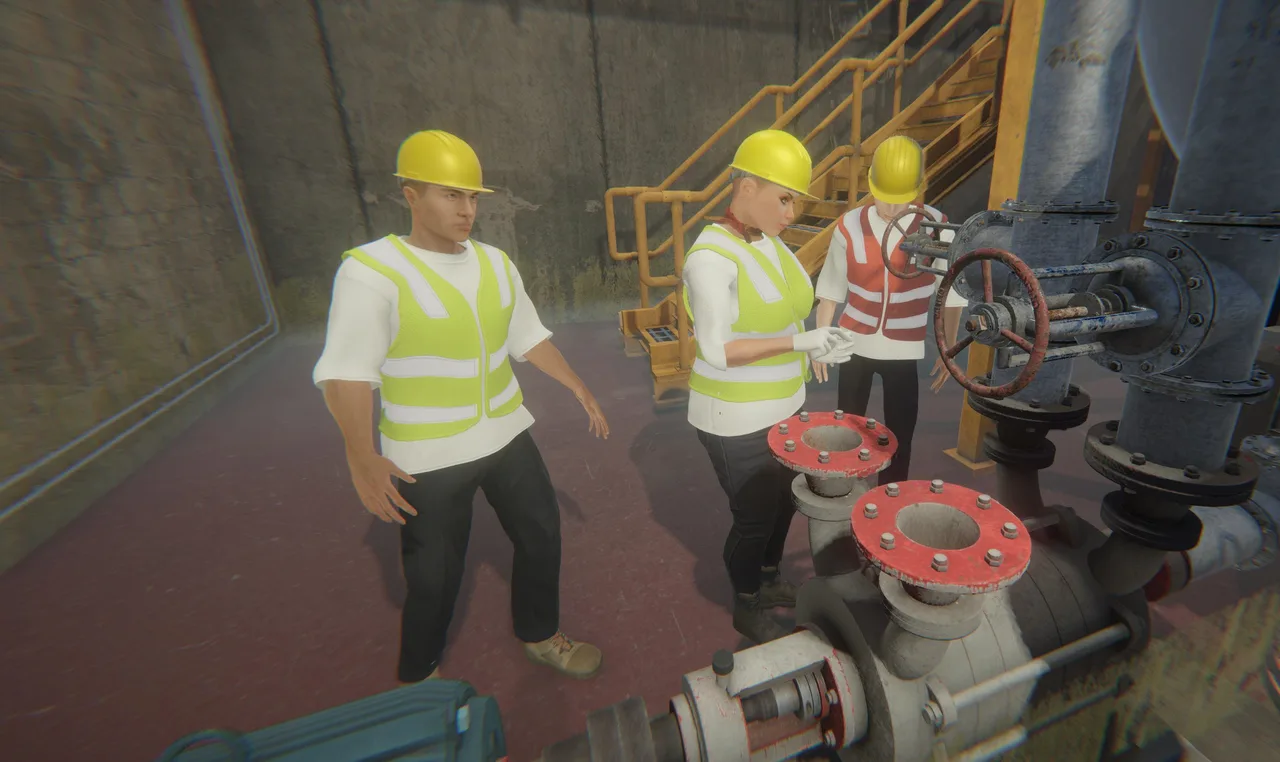
Answers
Questions we get asked
Including how it compares with live drills and single-purpose VR.
Read the answers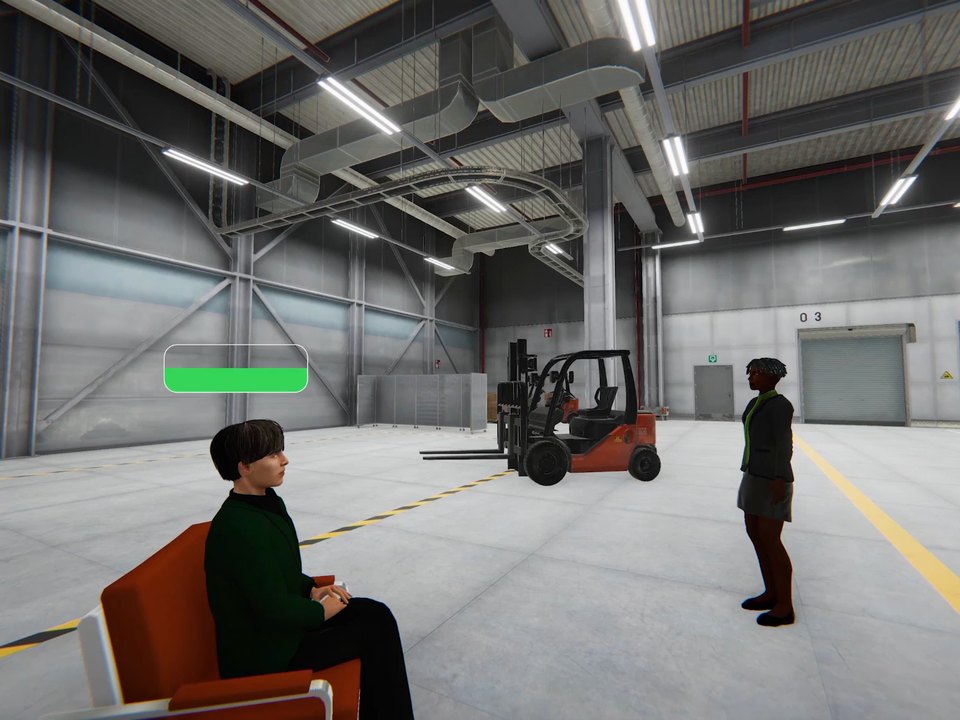
Platform
Scene-aware agents
AI agents fill an empty seat, play the customer and watch the run, so your trainers can coach.
Explore scene-aware agents